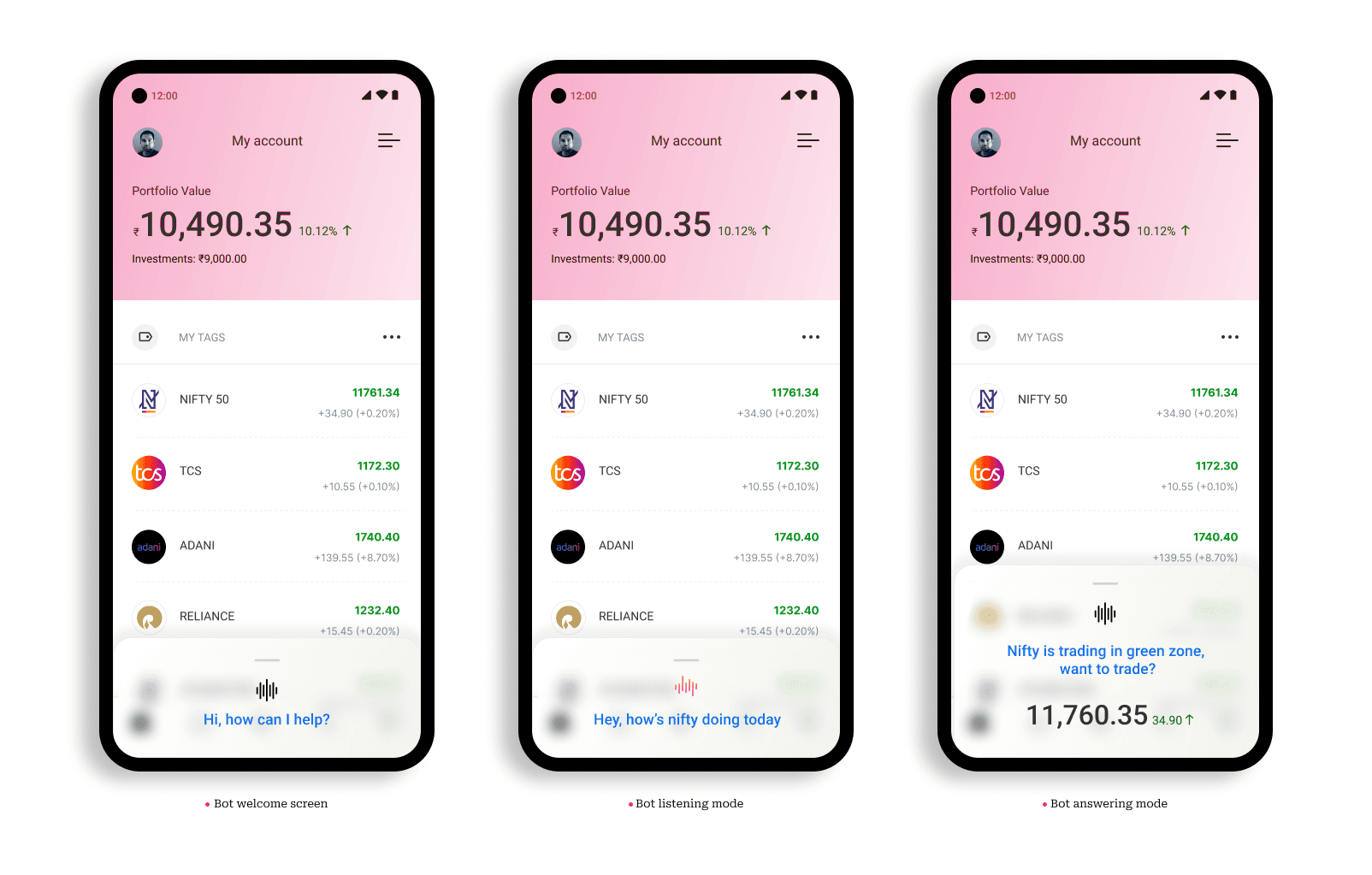
Decision clarity
Information overload
Dense market data and different levels of expertise made it difficult to know what to explore, evaluate, or act on next.
Designing for a million traders and investors—with clearer decisions, trusted expertise, and an experience shaped around intent.
A server-driven UI let the team test ideas and release changes quickly, revealing complexity as each investor's intent became clearer.
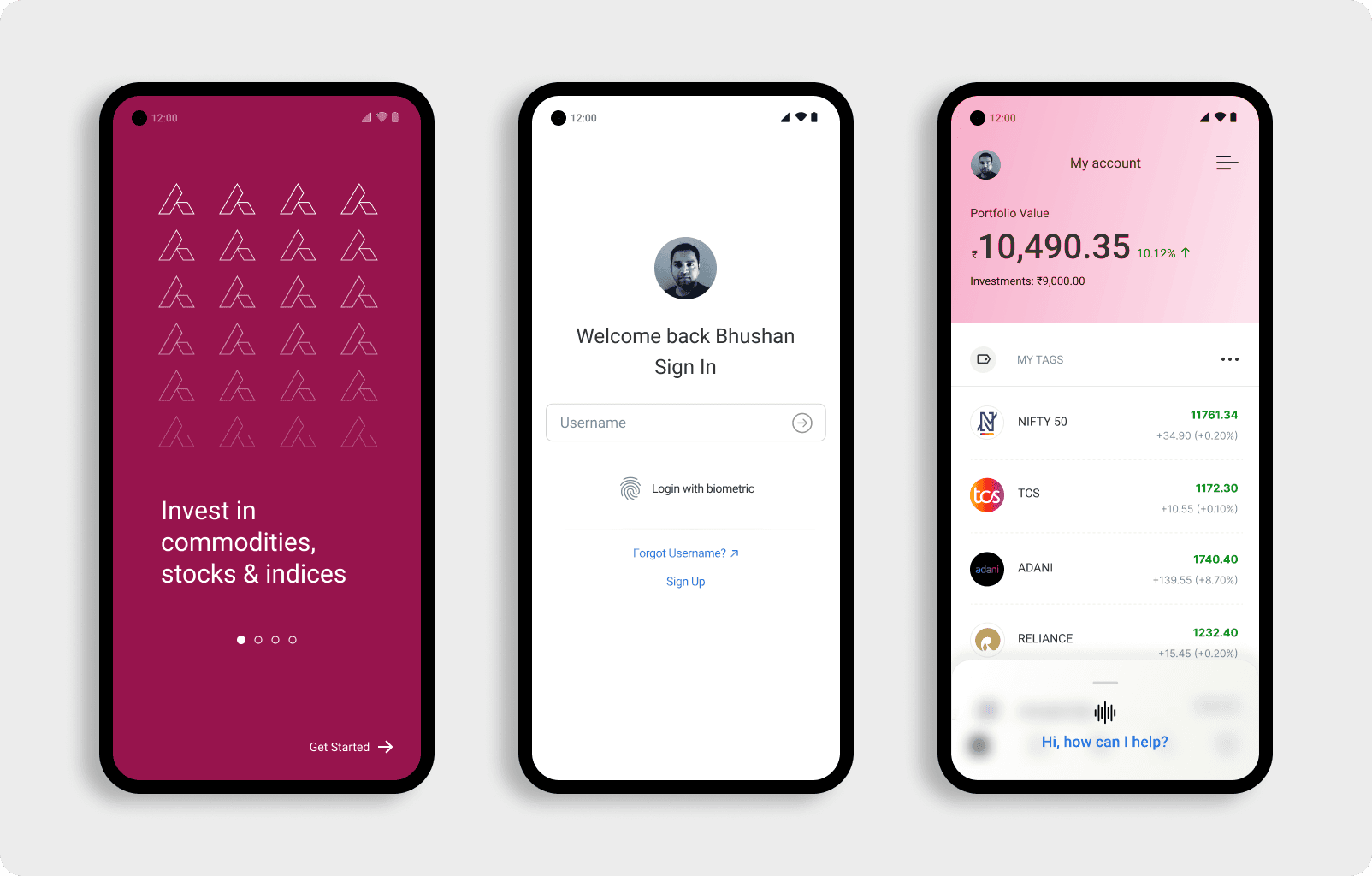
Strategy and execution. I shaped the UX strategy, research, journey mapping, information architecture, UI architecture, and product experiments across the investment experience.
Increase new-user acquisition, improve retention, and re-engage existing traders while reducing the cognitive load created by complex market data and decision paths.
A server-driven, progressive experience gave the team a shared foundation for personalized research, social investing, trading workflows, and voice navigation—designed once and deployed rapidly across customer journeys.
UX strategy, UX research, UI architecture, Information architecture, Product experimentation, Progressive UX.
Dense information, uncertain advice, and different levels of expertise complicated the journey from exploration to a trading decision.
Dense market data and different levels of expertise made it difficult to know what to explore, evaluate, or act on next.
The recurring ‘let me ask’ moment took investors outside the buying journey, where the quality of advice was uncertain.
Acquisition, retention, and re-engagement required frequent experiments and a product foundation that could adapt quickly.
I connected research, trusted guidance, and progressive UX to shape a product that could keep learning.
Research connected exploration, evaluation, and execution, helping the team organise the experience around what investors wanted to achieve.
Journey maps, mental models, and empathy maps
Explore each focus area to see how the strategy came together.
Heatmaps, analytics, and contextual inquiries revealed the triggers behind exploration, evaluation, and execution. Mental models and empathy maps translated those signals into design direction.
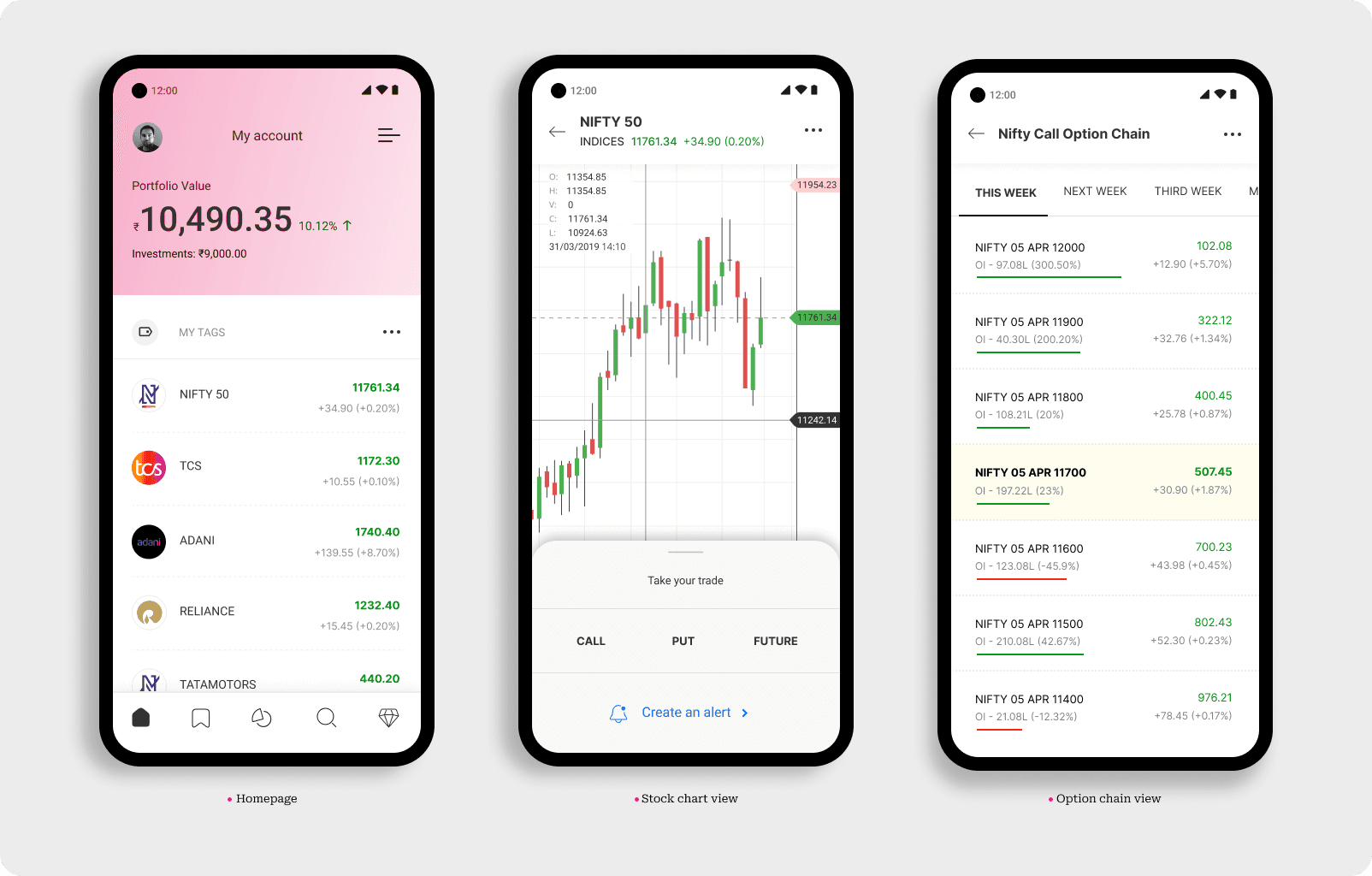
Option-chain data was organized around the decisions a trader needed to make next, reducing the effort required to move from analysis to action.
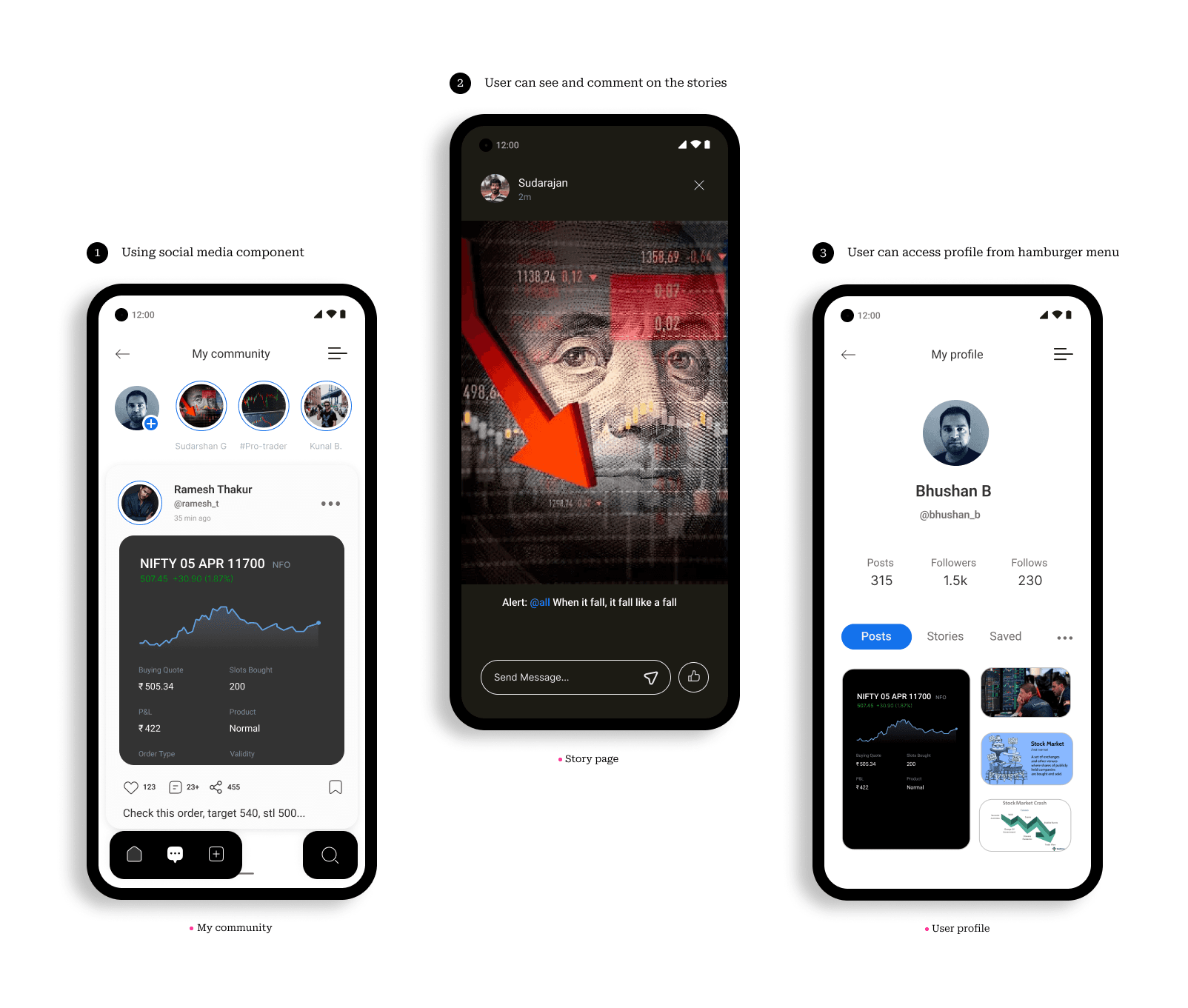
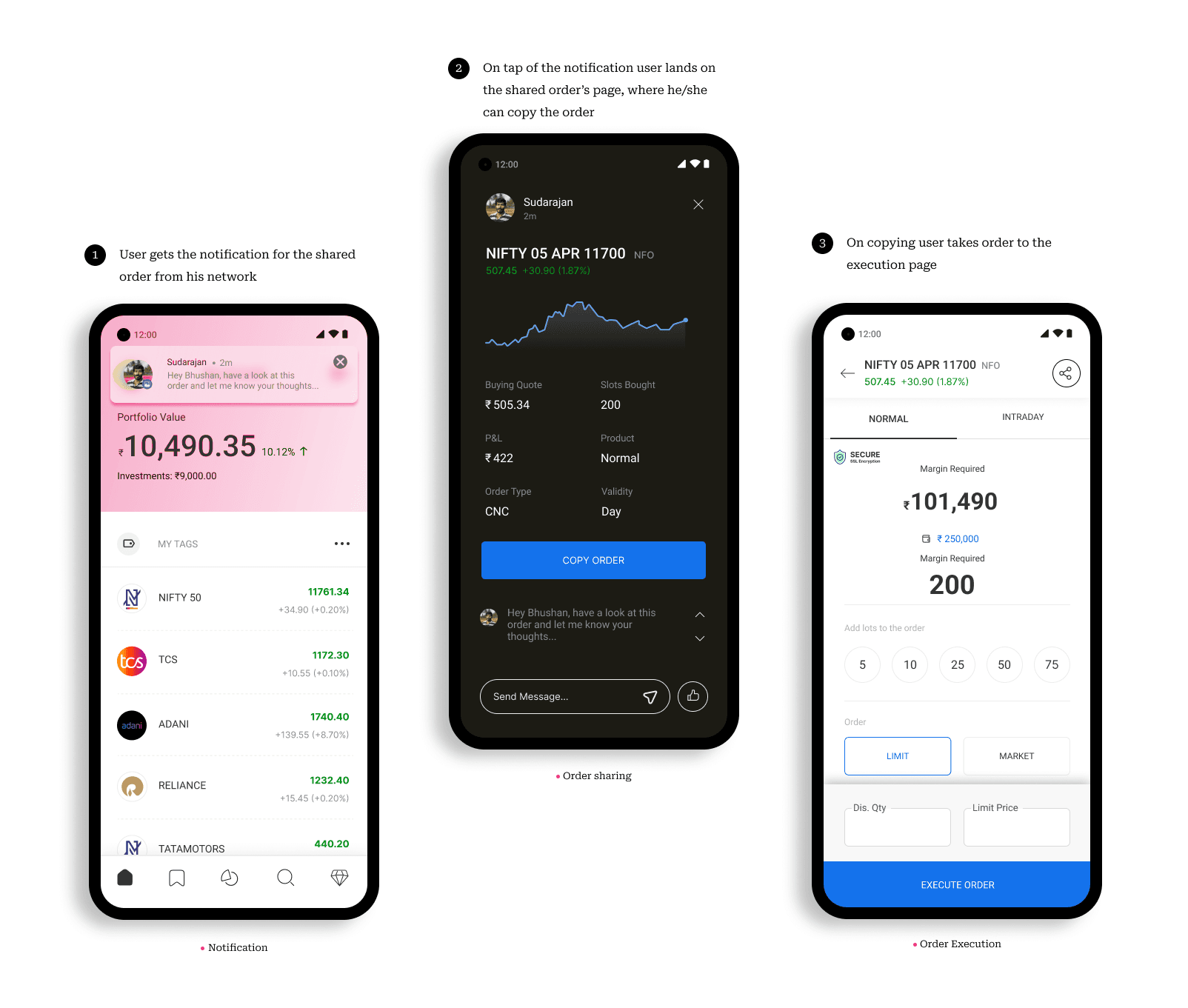
A recurring “let me ask” moment interrupted buying journeys. We conceptualized a network connecting investors with in-house experts, recognized influencers, and peers to bring guidance closer to the decision.
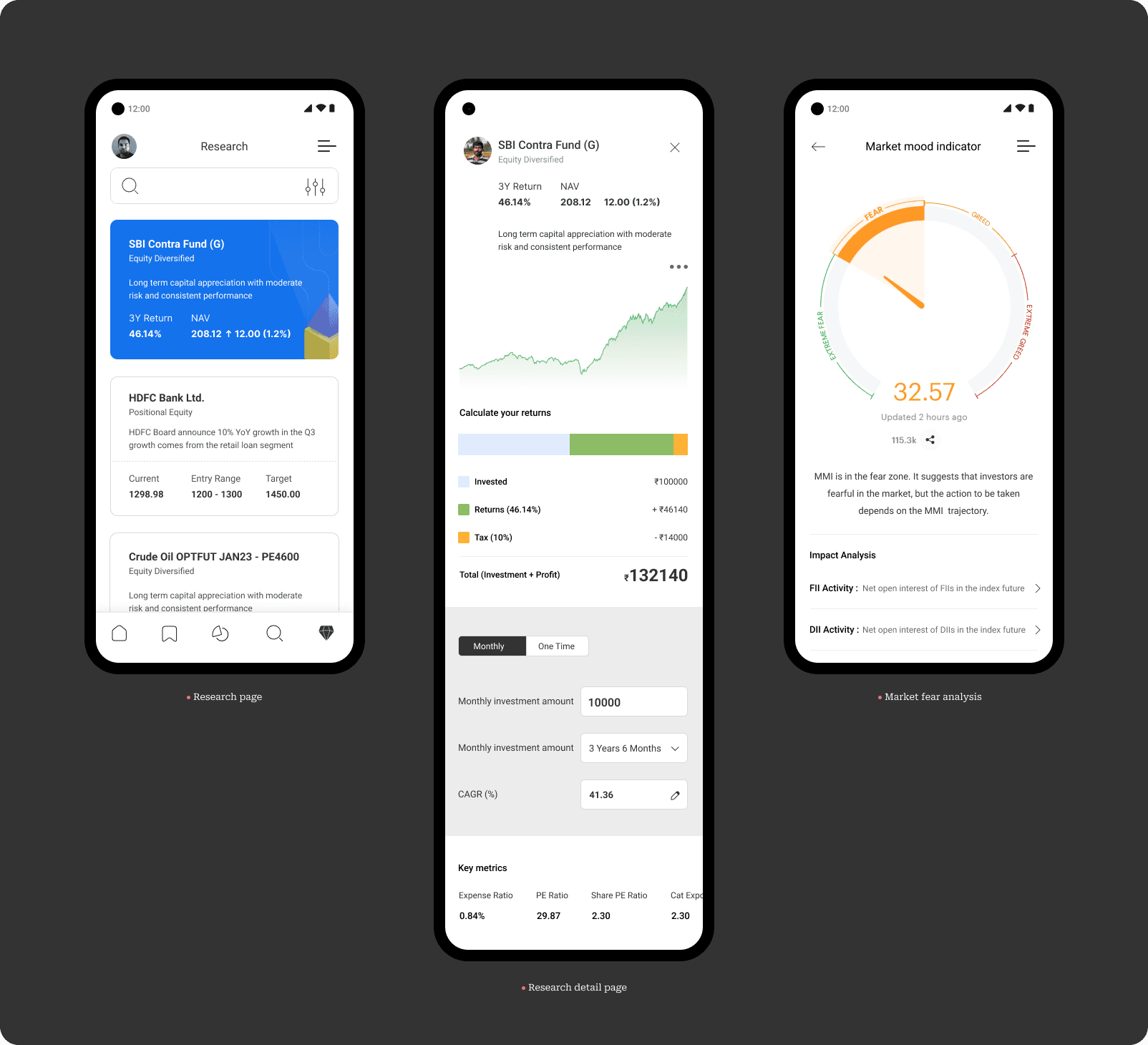
A simpler interface and personalized research suggestions helped investors find relevant evidence without wading through every market signal.
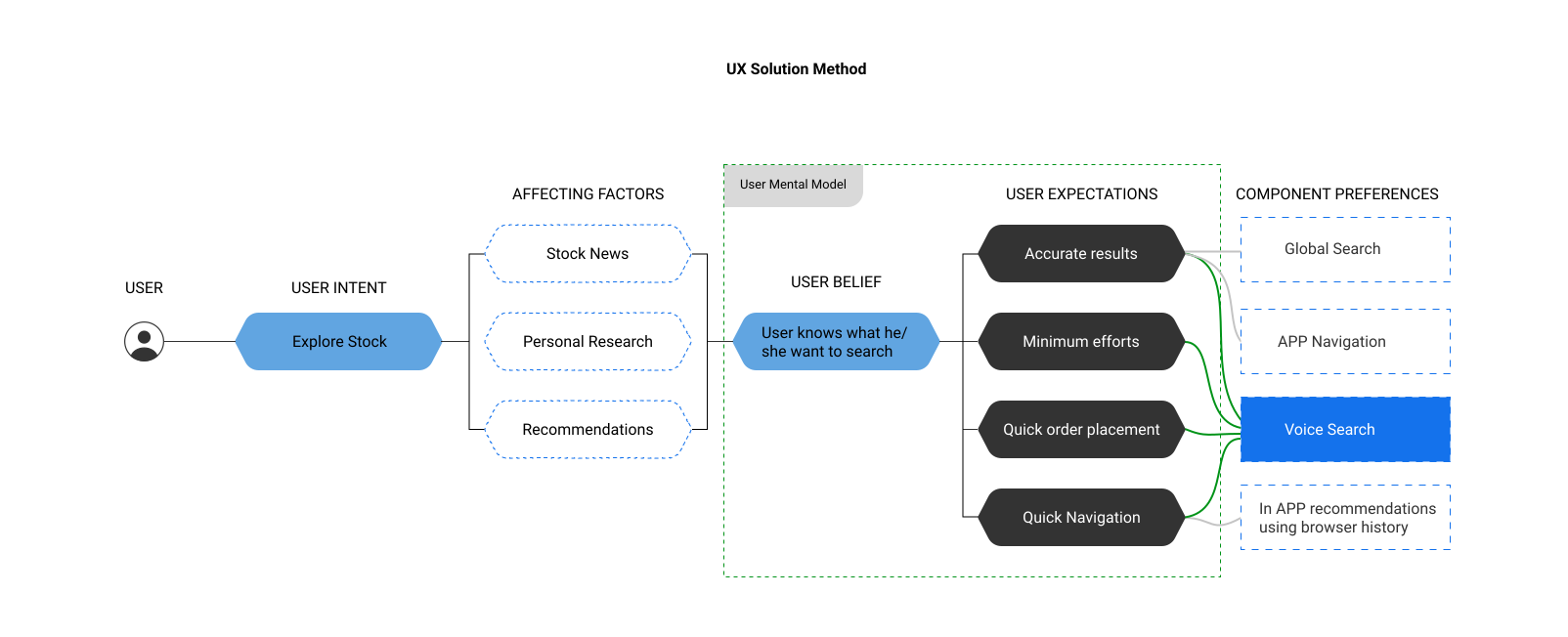
We connected user intent, mental models, and journey context to reusable components, shaping a voice flow traceable from customer need to a testable interaction.