01Workflow friction
User problem
Repetitive work, unclear ownership, and constant context switching slowed every review.
More effort. Less focus.
Product workflow case study
How an AI-driven application simplified underwriting by automating document review, validation, due diligence, and exception routing—accelerating decisions, improving productivity, and saving approx $100,000.
This case study presents selected work. Non-disclosure agreements prevent me from sharing the full set of project artifacts.
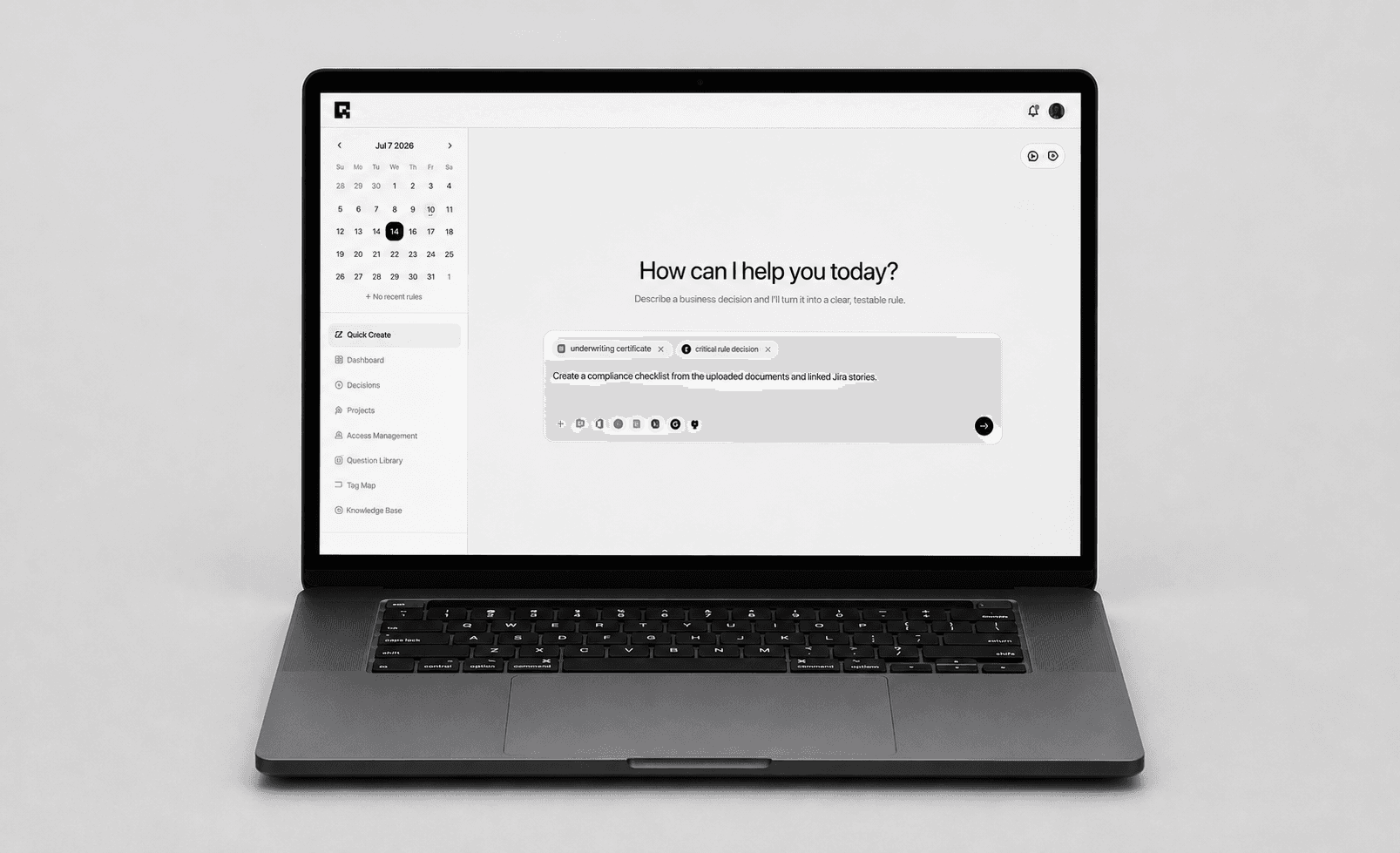
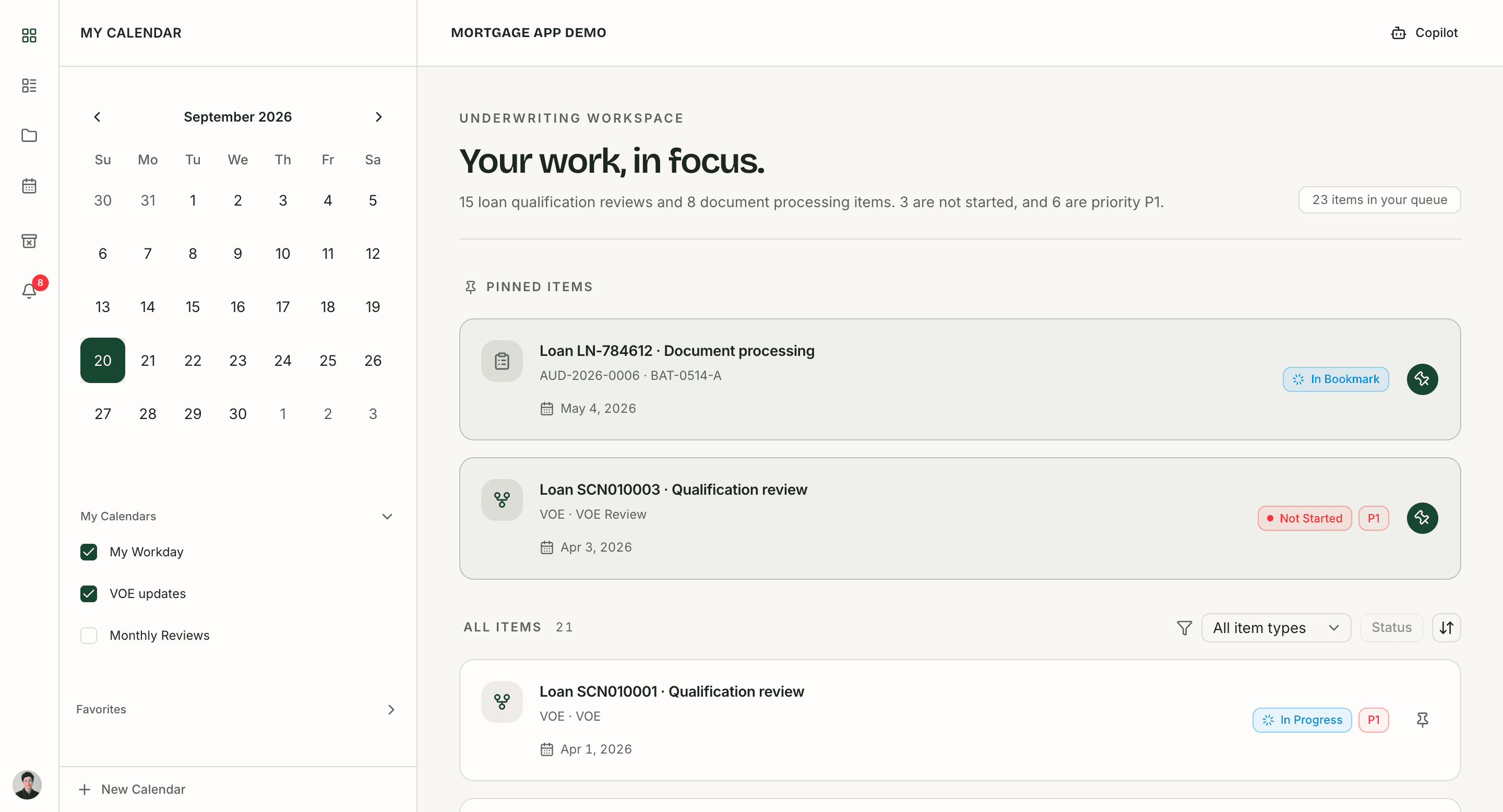
The calendar, pinned reviews, and document-processing queue bring daily priorities into a single view.
Information Architect & Design Lead. I was solely responsible for the UI deliverables, experience strategy, stakeholder approvals, UI design, and its implementation.
Cross-functional partnership across underwriting operations, product, design, and engineering.
AI agents run multiple tasks in parallel while generating accurate reports that reveal bottlenecks and operational issues.
Reimagined underwriting operations around intelligent orchestration. AI agents now process multiple tasks and subtasks in parallel—improving productivity by up to 60% and saving approximately two hours per task.
Underwriters were forced to manage complex, interdependent loan reviews through manual assignment and a maze of disconnected tools—fragmenting workflow context across nearly six applications.
Repetitive work, unclear ownership, and constant context switching slowed every review.
More effort. Less focus.
Longer cycles raised operating costs, reduced capacity, obscured performance, and constrained revenue.
More delays. Less capacity.
In 2024, lenders spent $11,076 per loan for just $443 in profit. Manual work and disconnected systems put already thin margins under pressure.
Higher costs. Thinner margins.
MBA benchmark. A digital credit-risk programme reduced processing costs by 30–40%. McKinsey case study
I led the experience and built agents to extend it.
I created an agent to support user research—helping turn research material into organised findings that I review and interpret.
Research insights & business context
Explore each phase to see what I led, what I built, and how the work came together.
I mapped tasks, systems, handoffs, and wait states to understand where underwriting expertise mattered—and where the product could take on the repetitive work.
Underwriters balanced high-value risk decisions with document sorting, data entry, follow-ups, and queue administration across disconnected applications.
I grouped business findings into primary, secondary, and tertiary tasks. This hierarchy guided feature prioritisation and shaped how the product workflow comes together.
| Assess and select risk | Triage new submissions and establish review priority | Monitor routine status notifications and reminders |
| Determine coverage structure | Review statements of values, loss-control reports, and supporting documents | Classify, bookmark, rename, and file documents |
| Set pricing, deductibles, and terms | Validate exposure values, business-income limits, and rating inputs | Extract data from documents and enter it into systems |
| Decide whether to quote, modify, decline, or bind | Investigate exceptions, discrepancies, and missing information | Reconcile routine worksheets and correct administrative data errors |
| Apply underwriting judgment to complex or unusual risks | Prepare referrals and obtain approval when authority limits are exceeded | Maintain queues, assign reviewers, and update workflow statuses |
| Own the final underwriting decision and its rationale | Confirm subjectivities, required documents, and bind readiness | Chase standard documents and perform routine follow-up that can be automated or delegated |
Risk assessment, exception review, and a clear decision workspace with evidence and rationale close at hand.
Review the prepared case, resolve exceptions, and make the final decision. Human ownership stays explicit.
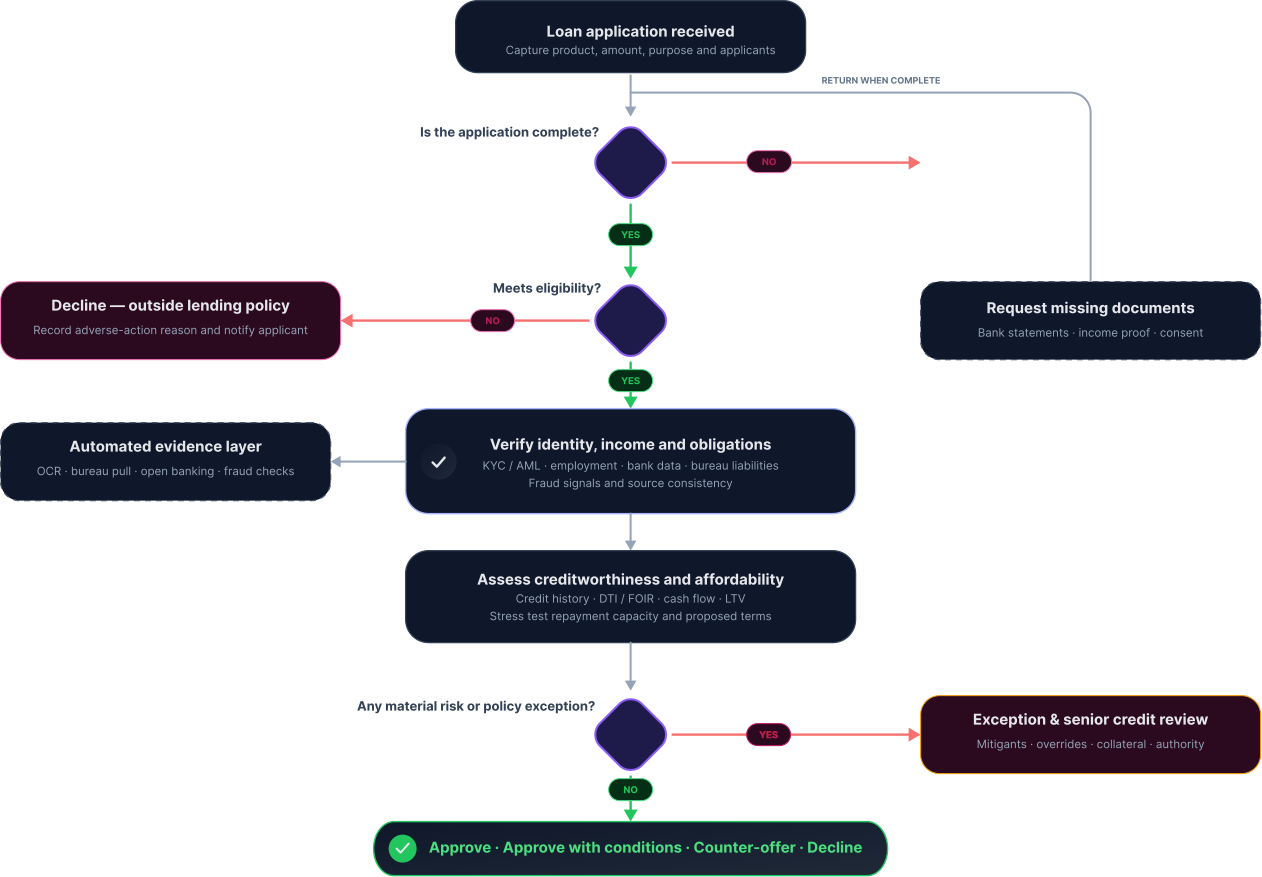
Mapped stages, systems, and handoffs to expose dependencies and wait states.
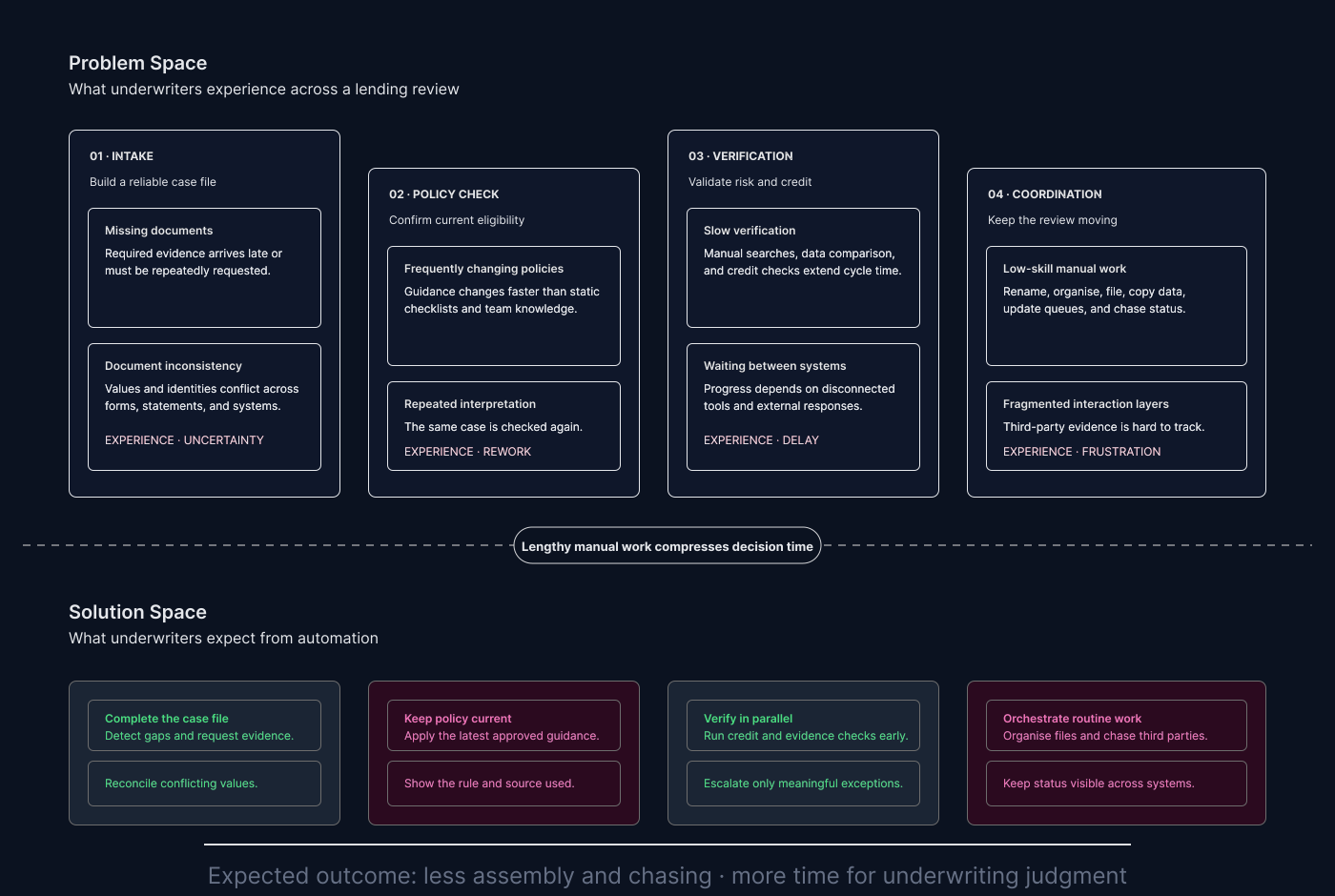
Linked document gaps, shifting rules, and coordination friction to the need for trusted automation.
Note: I create a wide range of research and design artifacts, including personas, journey maps, A/B testing reports, analytics reports, harmonisation reports, and testing documentation. Non-disclosure agreements prevent me from sharing the complete set of deliverables; the examples above offer a glimpse into my process.
One workspace for priorities, evidence, and decisions. AI prepares and validates documents; underwriters review exceptions and own the final call.
Classify, extract, and validate in parallel. Route exceptions to a reviewer with the source evidence attached.
Step inside the working prototype to explore the underwriting experience.
Useful automation gives experts the context and time to make better decisions.
Automate routine preparation so underwriters can focus on risk and exceptions.
Keep source evidence and reasoning close to every recommendation.
Show who acts next, what needs review, and where the human decision belongs.