Platform consistency
Fragmented systems
Country-specific legacy applications split one shipment journey across disconnected tools, making it difficult to manage clearance end to end.
A unified cloud application for managing international shipments end to end—replacing fragmented customs-clearance tools with predictive workflows, configurable interfaces, and reusable product foundations.
Product strategy and execution. I led UX strategy, research, information architecture, UI architecture, prototyping, and the design-system direction for the unified platform.
Worked with regional operations, customs-clearance experts, compliance, product, and engineering teams across Singapore, New Zealand, and the United States.
A configurable cloud platform replaced country-specific UI foundations with one scalable product model—supporting regional workflows, predictive tasks, reusable automation, and connected fraud investigation.
Product strategy, UX strategy, UX research, UI architecture, Information architecture, Design system.
Legacy customs tools differed by country, splitting one shipment journey across disconnected systems. Teams reconciled entries manually while regional requirements made one scalable workflow difficult to achieve.
Country-specific legacy applications split one shipment journey across disconnected tools, making it difficult to manage clearance end to end.
Teams had to manage and update shipment entries across different systems. Operational discrepancies slowed work and made progress harder to track.
Singapore, New Zealand, and the United States followed different processes. A unified platform needed to accommodate each region’s workflows and data structures.
I shaped a shared interface, configurable components, and prototypes that brought regional teams into the design process.
Use a shared product structure that accommodates local customs-clearance workflows, so regional requirements remain visible within one experience.
Regional requirements and a shared experience direction
Explore each focus area to see how the strategy came together.
We mapped sequential workflows that could become reusable AI snippets, reducing setup while keeping users in control.
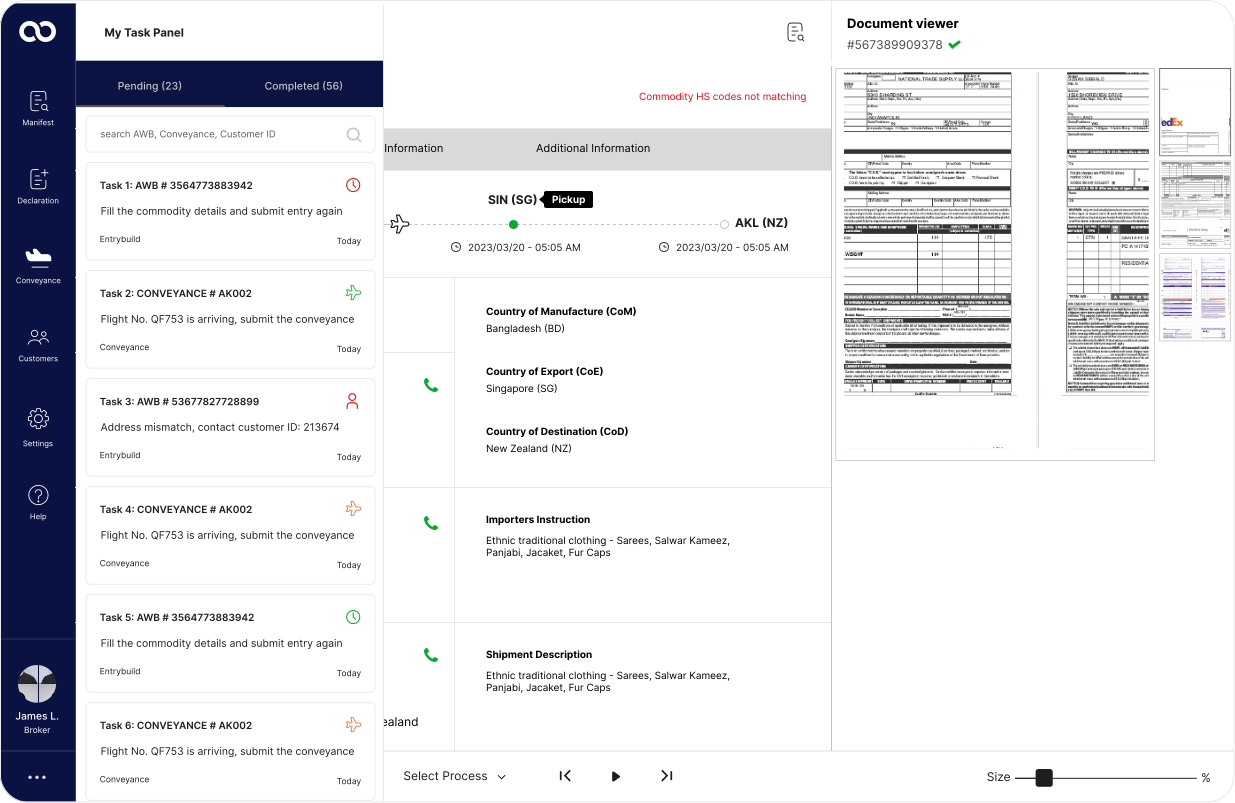
Reusable AI snippets package familiar sequences, reducing setup and creating a consistent execution model across markets.
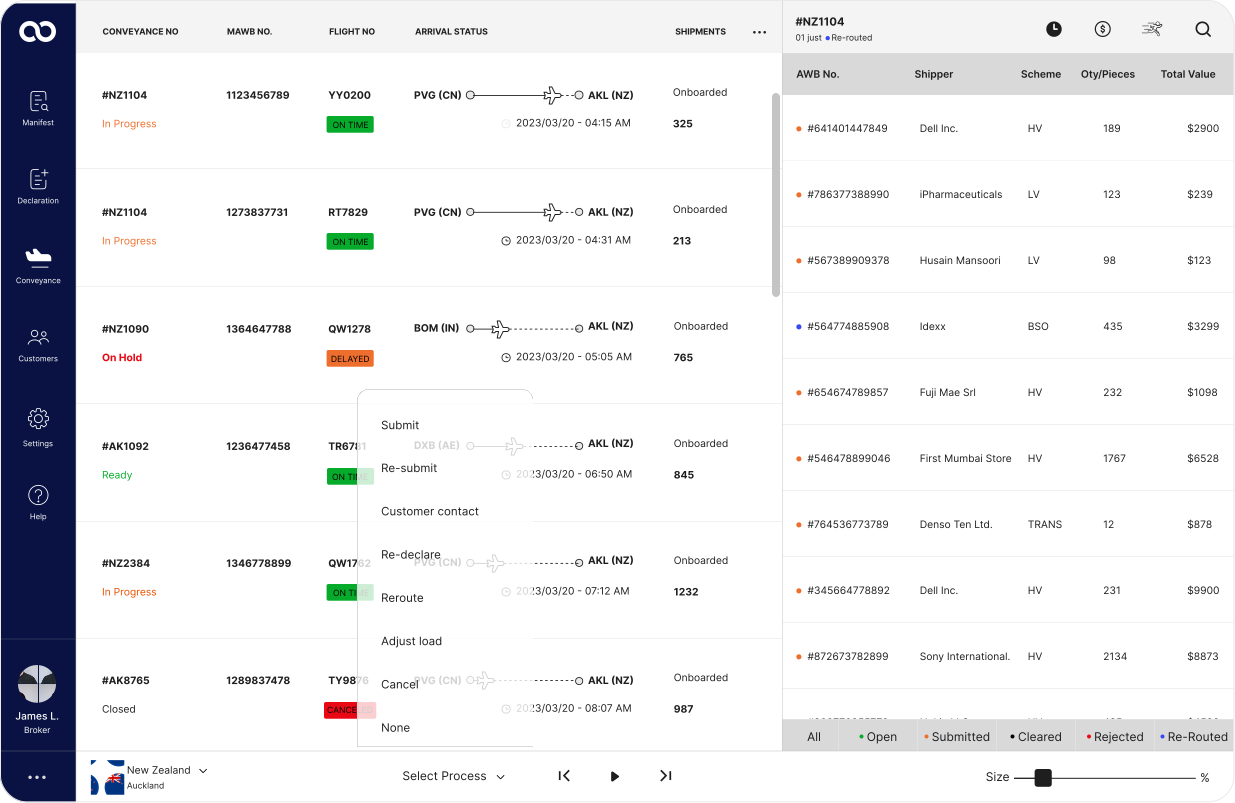
Task creation was manual and status-driven. The platform predicts the next step and creates the task automatically, keeping ownership visible.
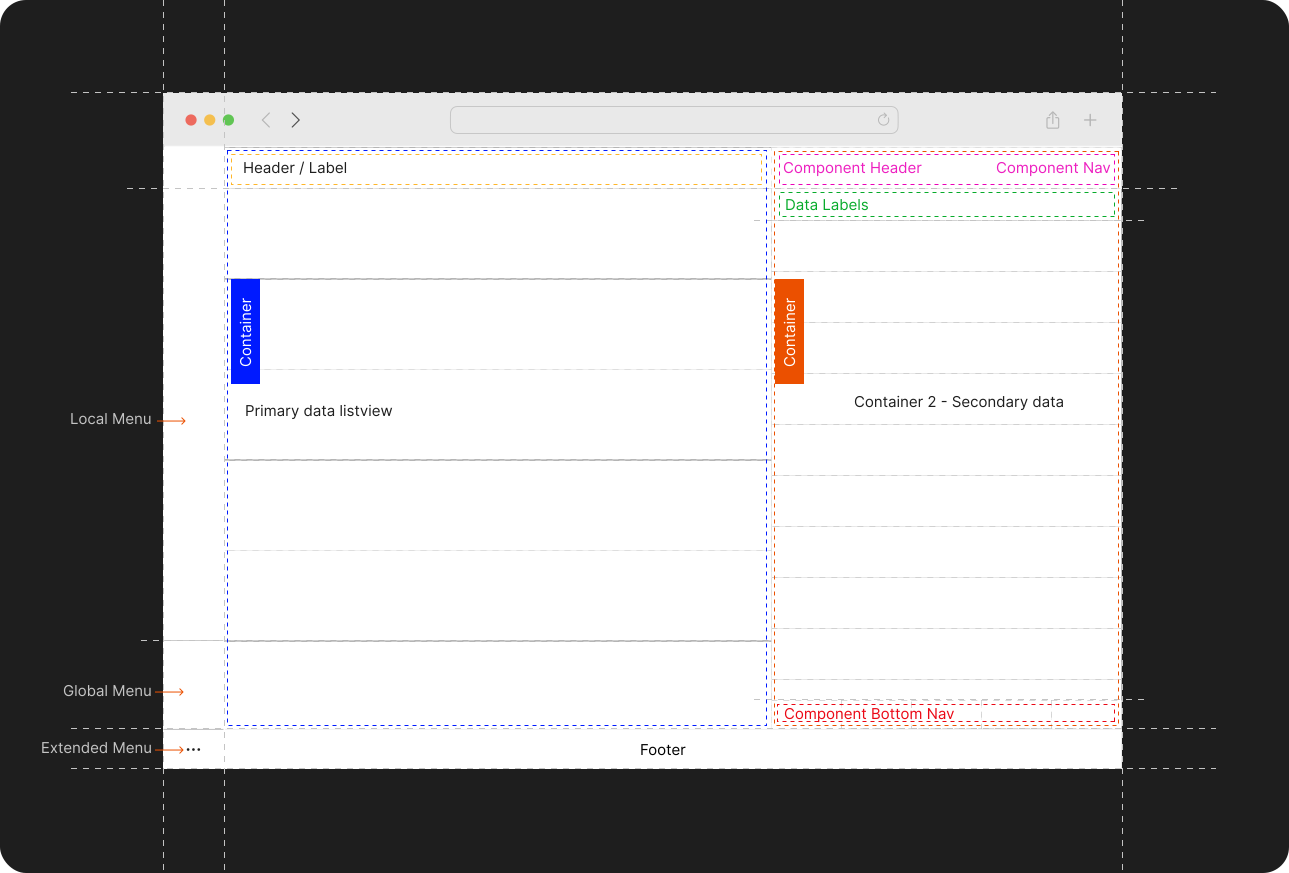
Regional research shaped responsive templates with flexible containers, allowing country-specific components without fragmenting the product.
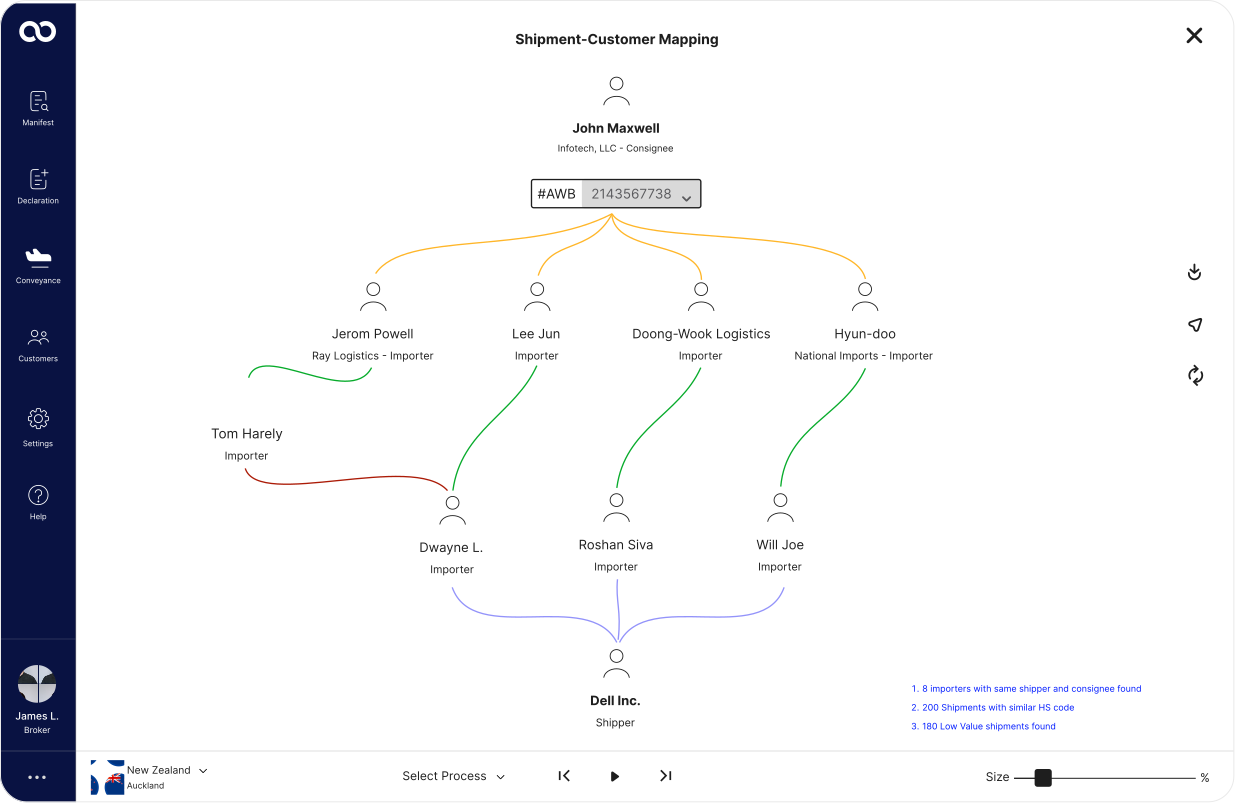
Compliance scenarios connect shippers, consignees, and shipments to reveal patterns across entries and support earlier fraud detection.